International Conference on Religious Freedom and Peacemaking in Doha
Theme: "From Religious Freedom to Religious Responsibility: Peacemaking in a Destabilized World."
DATE: FEBRUARY, 18-20, 2025
VENUE: DOHA QATAR
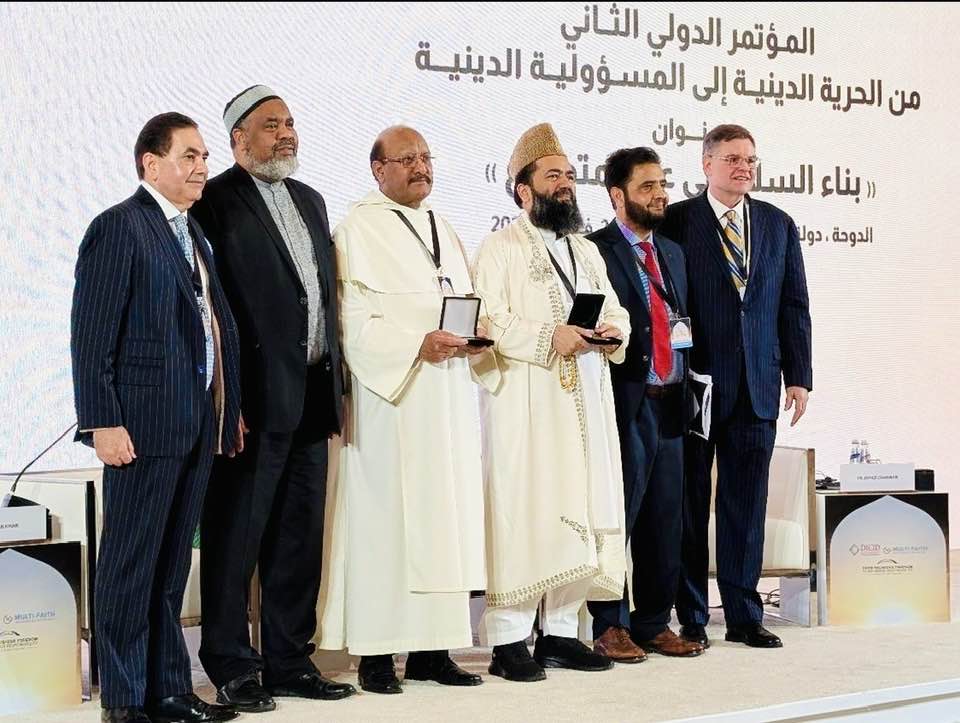
Under the Patronage of HE Prime Minister and Minister of Foreign Affairs Sheikh Mohammed bin Abdulrahman bin Jassim Al-Thani, the Doha International Center for Interfaith Dialogue (DICID), in collaboration with the Multi-Faith Neighbours Network (MFNN), held international conference titled "From Religious Freedom to Religious Responsibility: Peacemaking in a Destabilized World."

The event took place in Doha, Qatar, from February 18-20, 2025.
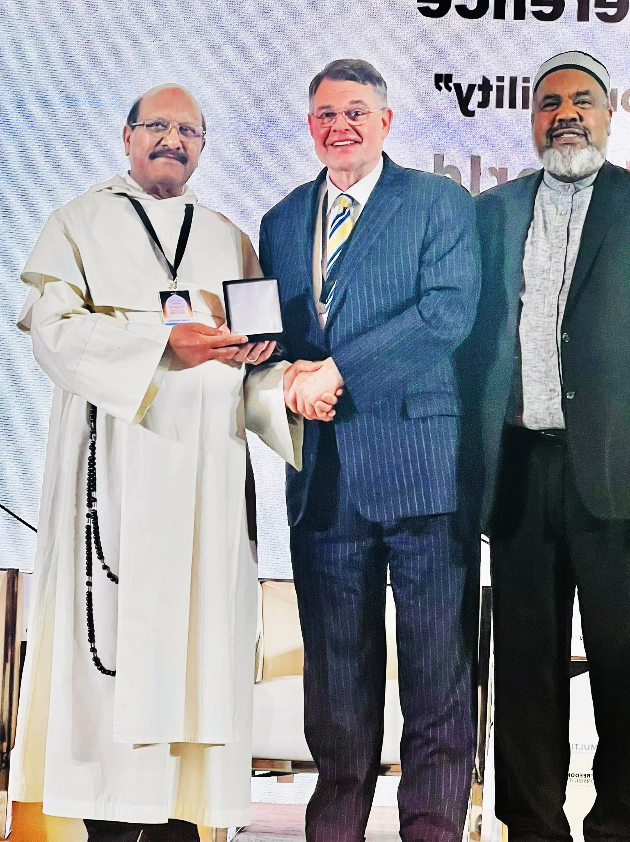
 Fr. James Channan OP Director Peace Center, Lahore participated in the Internationa Interfaith Conference as State guest and in this conference he shared his views about Interfaith dialogue and harmony and how together we can work as bridges of Peace not walls of hate.
Building on the success of last year's conference, "From Religious Freedom to Religious Responsibility: Building Communities of Advocacy and Action," this years edition takes a crucial step forward by focusing on peacemaking.
The conference explore the intersection between religious freedom and the collective responsibility of faith communities in fostering peace amidst global instability.
HE Chairman of DICID Prof. Ibrahim bin Saleh Al Naimi emphasized the conferences alignment with DICIDs mission and vision: "At a time when the world faces unprecedented challenges, DICID remains committed to promoting dialogue, coexistence, and mutual respect.
"This conference is an extension of our efforts to ensure that religious freedom is not just a right but a responsibility towards building sustainable peace," he added.
He noted that the conference seeks to explore the role of religions in conflict resolution, promote peace, and emphasize religious responsibility in an increasingly challenging world. The conference aims to strengthen interfaith dialogue highlighting the role of religions in fostering peace and coexistence; discuss successful conflict resolution models; explore ways to enhance peace initiatives; analyse challenges in peacebuilding; highlight the role of humanitarian organizations in peace efforts.
Attendees engaged in discussions on religious pluralism, human rights, and legislative perspectives, exchanging best practices and strategies for fostering interfaith collaboration. With its strong focus on actionable outcomes, the conference aims to translate discussions into tangible initiatives that promote lasting peace.
Regarding the aspirations of the conference and its anticipated outcomes, Prof. Al Naimi affirms the alignment between the conferences importance, objectives, and outcomes: "Amidst the growing challenges our world faces today, this international conference reaffirms that interfaith dialogue is not a choice but a necessity for achieving peace and stability. Religions bear a profound moral responsibility to build bridges rather than walls, fostering values of tolerance and coexistence among nations. We aspire for this conference to serve as a transformative step toward enhancing collaboration between religious leaders and policymakers, paving the way for a more peaceful, secure, and united world for all."



